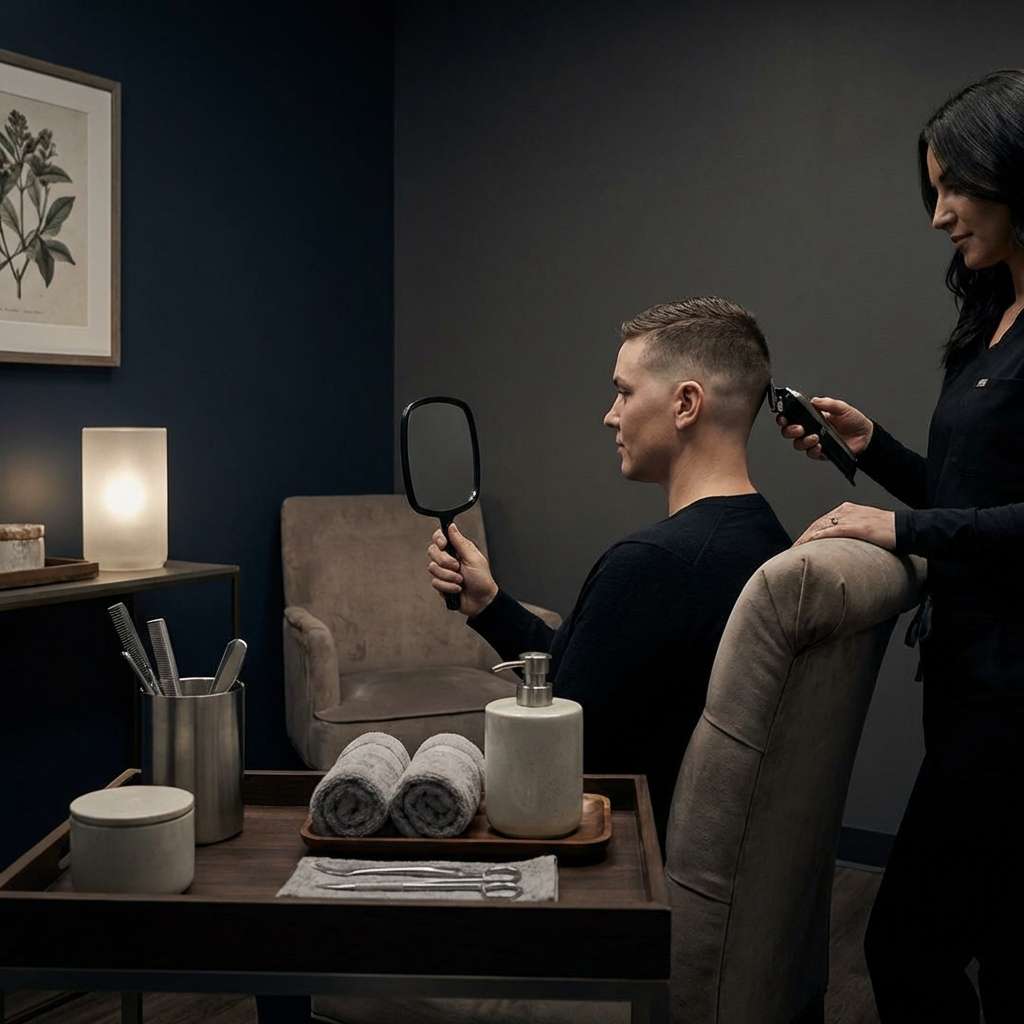
How to Fade Your Own Hair Maintenance Between Cuts
Hair Loss & Health Scan
BALDY AI APP
Get a personalized treatment protocol with Heatmap Analysis and 30+ data insights.
Access hundreds of exercises, research, and real results. Download Baldy now!
Start Your Scan
How to Fade Your Own Hair: Maintenance Between Cuts
Fades grow out faster than almost any other haircut. What looks clean and intentional at the barber can start feeling heavy and uneven within a couple of weeks.
Learning to maintain your own fade isn’t about replacing your barber.
It’s about extending the life of a good cut.
With a few simple tools and realistic expectations, you can keep your fade looking controlled between appointments without chasing perfection.
Understanding What Actually Breaks First
When a fade grows out, it doesn’t fail everywhere at once. The first thing to go is the transition. Hair near the bottom grows upward and darkens the blend while the top stays the same.
The eye notices the loss of gradient more than the increase in hair.
Knowing this keeps you from cutting where you don’t need to. Maintenance is about protecting the fade zone, not redoing the haircut.
Tools That Make This Easier
You don’t need a professional setup. What matters is control. Most people can maintain a fade with:
- A clipper with adjustable lever
- One or two guard lengths near your fade range
- A handheld mirror or good rear camera setup
- Steady lighting
Fewer tools force restraint, which usually leads to better results.
Start Higher Than You Think You Should
One of the most common mistakes is starting too low. People see darkness near the bottom and instinctively attack it. This lowers the fade and flattens the shape of the cut.
You can always remove more.
You can’t put hair back.
Use Small Movements, Not Full Passes
Fading is about touch, not force. Short, flicking motions work better than long strokes. They soften edges without creating new lines. Think in terms of blending, not cutting.
Maintenance cuts should feel almost boring.
Let the Lever Do Most of the Work
The clipper lever is your best tool for in-between blends. Instead of jumping between guards, adjust the lever gradually. Closed lever cuts closer. Open lever cuts longer. Small adjustments smooth transitions without creating harsh steps.
Levers create gradients.
Guards create boundaries.
Mirror Distance Matters
Most mistakes happen too close to the mirror. Up close, you chase symmetry and tiny inconsistencies that no one else will ever see.
If the fade looks even from a few feet away, it’s doing its job.
Distance gives perspective. Fades are meant to read well in real life, not under inspection.
Clean the Edges, Then Stop
Edges matter more than perfection. Cleaning the neckline, around the ears, and the lower outline immediately refreshes the cut.
Overworking the fade after the edges are clean is how mistakes happen.
Even if the fade isn’t perfect, sharp edges make the whole haircut feel intentional. Know when to stop.
Maintenance Schedule That Works
You don’t need to touch the fade constantly. Light maintenance every 7 to 10 days usually works better than heavy corrections after three weeks.
Think of it as upkeep, not repair.
Consistency keeps things controlled with less effort. Short sessions reduce pressure and prevent overcutting.
Matching Fade Style to Hair Density
Fades interact differently with thinning hair. High fades expose more scalp and can increase contrast if density is low. Lower or mid fades tend to blend more naturally as hair changes.
If hair is thinning, subtle fades age better than dramatic ones.
Accepting “Good Enough”
At-home fades won’t match a professional cut. That’s okay. The goal isn’t perfection. It’s extending the clean look and avoiding that awkward in-between phase.
Good enough is actually good.
Chasing barber-level results at home usually leads to frustration. If the cut looks controlled and intentional, it’s a win.
Confidence Comes From Familiarity
Learning to maintain your own fade builds confidence over time. You get familiar with your head shape, growth patterns, and limits. Mistakes become smaller. Anxiety drops.
Familiarity beats skill early on.
Tracking what works and what doesn’t helps too. This is where tools like Baldy fit naturally, letting you note timing and outcomes without obsessing over daily appearance.
Key Takeaway
Maintaining your own fade between cuts isn’t about mastering technique. It’s about restraint, consistency, and knowing where not to cut. Focus on the transition, use light movements, clean the edges, and stop before you overdo it.
A fade doesn’t need to be perfect to look good.
It just needs to look intentional.
Baldy Partner Feature
BALDY AI APP
Get a personalized treatment protocol with Heatmap Analysis and 30+ data insights.
Access hundreds of exercises, research, and real results. Download Baldy now!
Learn More
Editorial Policy
Content is educational and not medical advice. For diagnosis or treatment decisions, consult a licensed clinician.