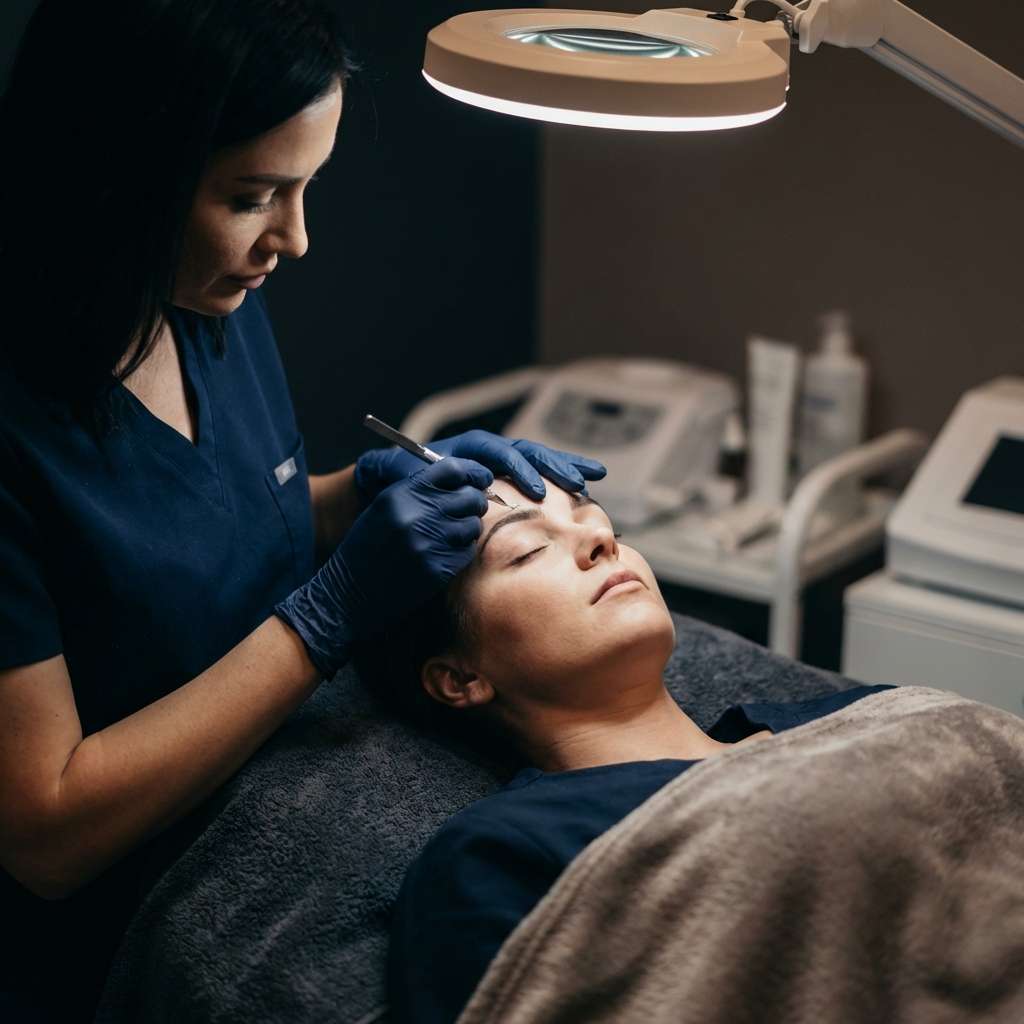
Eyebrow Grooming to Frame the Face
Hair Loss & Health Scan
BALDY AI APP
Get a personalized treatment protocol with Heatmap Analysis and 30+ data insights.
Access hundreds of exercises, research, and real results. Download Baldy now!
Start Your Scan
Eyebrow Grooming to Frame the Face
Eyebrows rarely get attention until something else changes. When hair thins or disappears, the face loses one of its natural frames. The forehead feels larger, and expressions feel less anchored.
Well-groomed eyebrows don’t replace hair.
They restore balance.
Not as a trend, but as structure, eyebrows give the face edges again. They quietly and effectively take on more visual responsibility when the scalp hair softens or moves back.
Why Eyebrows Matter More When Hair Changes
The face is read from the top down. When the upper boundary of hair recedes, eyebrows become the next strongest horizontal line.
Eyebrows anchor the eyes.
Eyes anchor expression.
If brows are sparse or undefined, the face can feel visually “open” in a way that’s hard to name but easy to feel. Maintaining them ensures the face remains grounded.
Framing vs. Styling: The Real Goal
Eyebrow grooming isn’t about shaping them into something new; it’s about clarity. A good brow shape follows your natural growth and avoids extremes.
Brows should look intentional, not designed.
The goal is presence without performance. Over-styling draws too much attention, while under-grooming lets the brows fade into the background.
Density Creates Stability
People often focus on shape first, but thickness usually has a bigger impact. When eyebrows are too thin—especially alongside a shaved head—the face can look top-heavy.
Fuller brows counterbalance a receding hairline by adding visual weight.
This doesn’t mean “bushy,” it means:
- Avoiding over-plucking or over-trimming
- Keeping enough density to ground the face
- Prioritizing natural mass over precise arches
Cleaning the Edges Without Overdoing It
The most effective grooming happens at the edges. Removing stray hairs between and below the brows cleans up expression immediately without altering the natural brow line.
Soft correction looks more natural than precision.
What tends to backfire:
- Thinning from the top down
- Creating sharp, artificial “theatrical” arches
- Chasing perfect symmetry too aggressively
Matching Brows to Hair Choices
Eyebrows should feel consistent with the rest of your look. Mismatch creates visual tension that can make the face feel “off.”
The face reads best when everything feels intentional.
- Buzzed or Shaved: Brows often need more presence and density to maintain balance.
- Longer or Textured: Brows can stay more relaxed and less defined.
- Color: Brows should be close to natural color, often slightly darker rather than lighter.
The Psychological Effect of Visual Coherence
Eyebrow grooming often has an outsized emotional impact. Because brows affect expression, small improvements can make you look more alert and grounded.
This feeling isn’t vanity; it’s visual coherence.
Strong eyebrows pull the focus downward toward the eyes. Expression becomes the focal point instead of the hairline. When the face feels framed, confidence tends to follow quietly.
Key Takeaway
Eyebrow grooming plays a quiet but powerful role in framing the face. Maintaining natural density and soft edges helps restore structure without drawing unnecessary attention.
You don’t need dramatic shaping.
You need clarity and consistency.
When the face feels framed again, attention shifts away from what’s missing and toward what’s present. That shift often does more for confidence than any larger change ever could.
Baldy Partner Feature
BALDY AI APP
Get a personalized treatment protocol with Heatmap Analysis and 30+ data insights.
Access hundreds of exercises, research, and real results. Download Baldy now!
Learn More
Editorial Policy
Content is educational and not medical advice. For diagnosis or treatment decisions, consult a licensed clinician.