Best Haircuts for a Receding Hairline (Norwood 2–3)
Hair Loss & Health Scan
BALDY AI APP
Get a personalized treatment protocol with Heatmap Analysis and 30+ data insights.
Access hundreds of exercises, research, and real results. Download Baldy now!
Start Your Scan
Best Haircuts for a Receding Hairline (Norwood 2–3)
A receding hairline doesn’t announce itself loudly. It shows up in small ways: corners that don’t sit the same, or a forehead that feels more exposed in certain lighting. You’re not bald, but styling doesn’t feel automatic anymore.
The right cut doesn’t hide hair loss.
It works with what’s there.
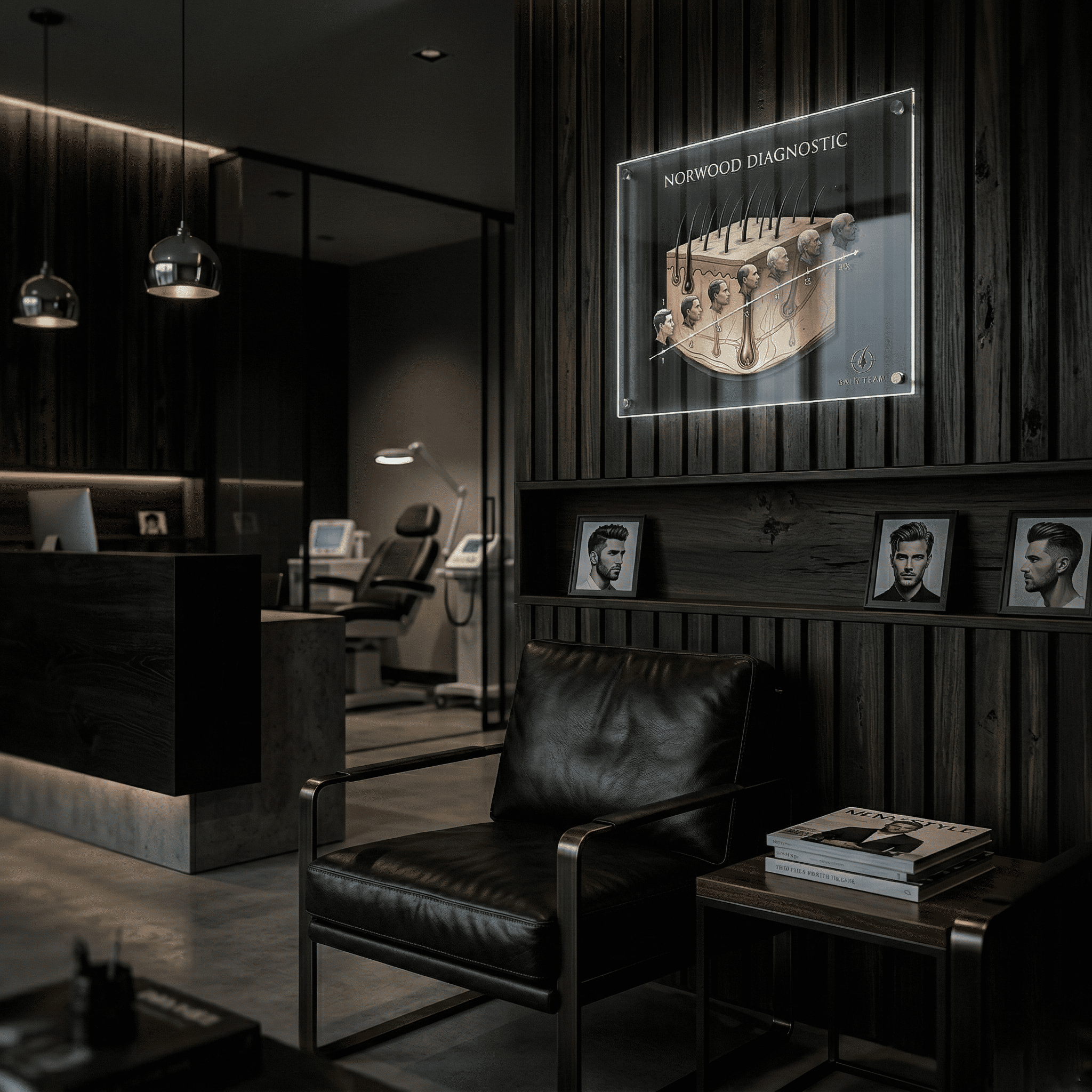
[Image of Norwood scale for hair loss]
At this in-between stage, the goal is understanding proportion and texture. A good cut removes the visual cues that make recession stand out.
Why Haircuts Matter More at Norwood 2–3
At early recession stages, density is usually still good. The issue isn’t lack of hair—it’s contrast. Sharp edges and exposed temples draw the eye exactly where you don’t want it.
A good haircut stops outlining the hairline.
A good haircut at this stage:
- Reduces focus on the temples
- Shifts attention to texture and shape
- Avoids styles that “frame” the recession
The Core Principle: Reduce Contrast, Add Texture
Receding hairlines look worse when there’s a stark difference between lengths. Long hair pulled back emphasizes the temples. Ultra-short sides with a longer top exaggerate the hairline shape.
Texture breaks up lines.
Gradual transitions blend areas together.
Softness works better than precision. The goal is to stop highlighting the edges of your hair and start focusing on the mass of it.
Short, Textured Cuts That Work Well
Short hair often works better than medium length at Norwood 2–3. Textured crops and short layered styles reduce the visual importance of the hairline by keeping everything moving.
Soft, broken texture matters more than exact length.
These cuts tend to:
- Minimize styling effort
- Look intentional even when hair shifts
- Age well as density changes over time
Why Buzz Cuts Can Be a Relief
Buzz cuts remove contrast entirely. There’s no “hairline” to frame when everything is the same length.
Buzz cuts don’t hide recession.
They neutralize it.
This feels unexpectedly freeing for many people. It works best when the scalp shape is even and the goal is simplicity rather than disguise. That difference matters psychologically.
Styles That Often Backfire
Some styles are popular because they promise control, but they often make recession more noticeable by drawing clean lines around a changing area.
Avoid these “precision” traps:
- Tight fades with very long tops
- Slick backs that expose the entire hairline
- Hard parts that create a new “gap”
- Sharp line-ups at the temples
If a style relies on precision, it will highlight imprecision.
The Role of the Barber
Communication matters more than the exact cut name. A good barber doesn’t “fix” recession; they adjust proportion.
Avoid asking to “hide” recession. Ask to balance it.
Try saying:
- “I want texture, not volume at the front.”
- “I want it to look natural as it grows out.”
- “Keep the corners soft, not sharp.”
Key Takeaway
At Norwood 2–3, the best haircuts don’t fight the hairline. They stop highlighting it. Soft texture, reduced contrast, and natural movement matter more than length or trend.
A good haircut doesn’t hide reality.
It removes unnecessary attention.
When attention shifts away from the hairline, confidence usually follows without effort.
Baldy Partner Feature
BALDY AI APP
Get a personalized treatment protocol with Heatmap Analysis and 30+ data insights.
Access hundreds of exercises, research, and real results. Download Baldy now!
Learn More
Editorial Policy
Content is educational and not medical advice. For diagnosis or treatment decisions, consult a licensed clinician.