Beard Styles That Balance a Receding Hairline
Hair Loss & Health Scan
BALDY AI APP
Get a personalized treatment protocol with Heatmap Analysis and 30+ data insights.
Access hundreds of exercises, research, and real results. Download Baldy now!
Start Your Scan
Beard Styles That Balance a Receding Hairline
A receding hairline changes how the face reads. The forehead draws more attention, and the upper half of the face feels heavier. You start noticing angles you never thought about before.
Beards don’t fix a hairline.
They rebalance attention.
When done well, a beard shifts focus downward and creates visual structure that softens recession without trying to hide it. This isn’t about growing the biggest beard possible; it’s about shape, density, and intention.
Why Beards Work When Hairlines Change
Faces are read as a whole. When hair thins, the top of the face loses visual weight. The eye naturally goes looking for something to anchor to. A beard provides that anchor.
It doesn’t compete with the hairline.
It complements the new proportions.
A well-chosen beard:
- Redistributes visual emphasis
- Adds structure to the jaw and lower face
- Reduces contrast between hairline and scalp
- Creates balance rather than disguise
The Core Principle: Structure Over Volume
Just like thinning hair, beards benefit more from structure than bulk. An unshaped, overly full beard can overwhelm the face and create a top-heavy look.
A beard should look deliberate, not compensatory.
What usually works best:
- Defined cheek and necklines
- Controlled density rather than wild growth
- Shape that follows natural jaw structure
Short Beards: Clean, Balanced, Low Risk
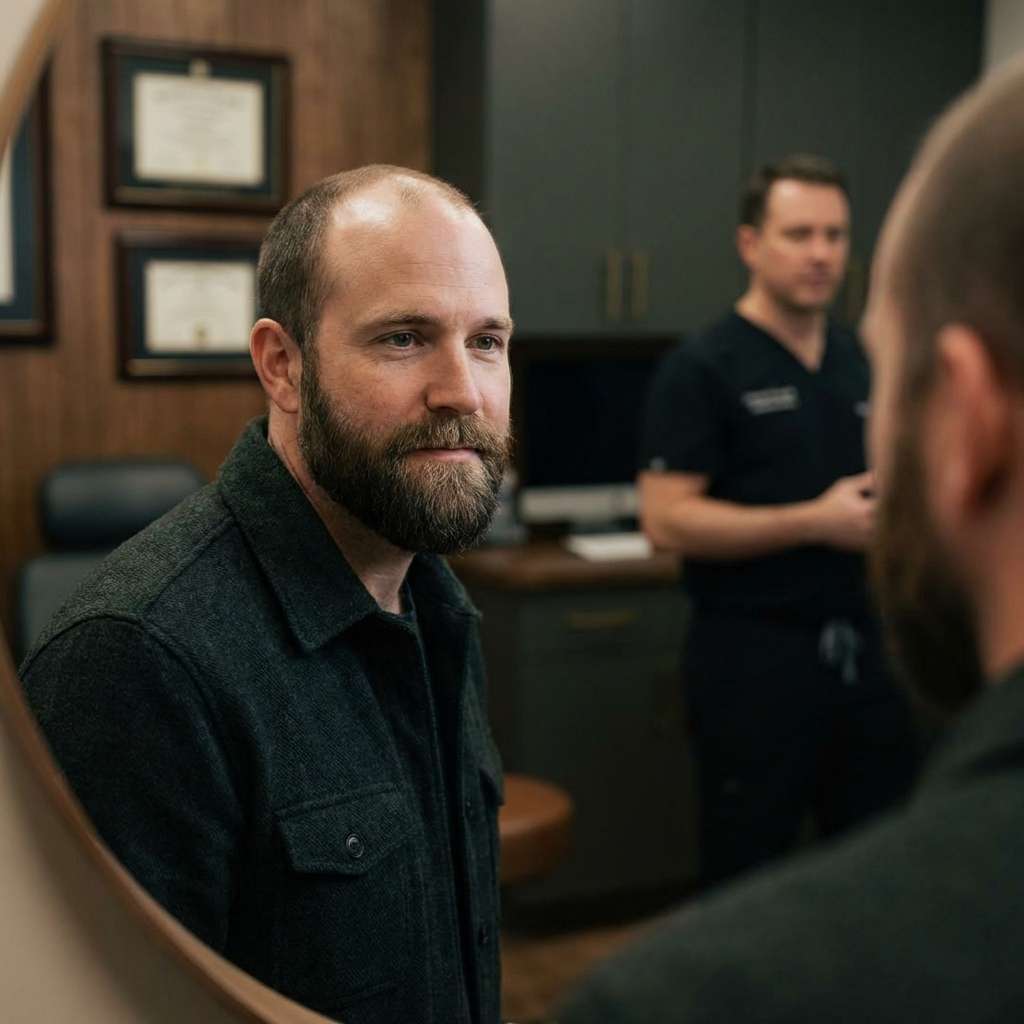
Short beards are the most versatile option for receding hairlines. They add presence without dominating the face and are easy to maintain as hair continues to change.
Consistency beats length here.
Short beards work well because they sharpen jaw definition and keep attention evenly distributed. Even light stubble can help, provided it is maintained with even length.
Medium-Length Beards: When Density Supports It
Medium-length beards can work well if density is decent and grooming is consistent. They add more visual weight to the lower face, which is helpful if recession is more noticeable.
Width adds bulk in the wrong places.
Length downward tends to be more flattering.
Medium beards work best when:
- Sides are kept tidy to avoid a “round” face shape
- Length increases gradually toward the chin
- Cheek lines stay natural rather than overly carved
Styles That Often Backfire
Some beard choices unintentionally highlight recession by drawing the eye to the very areas you are trying to balance.
If the beard feels like it’s trying too hard, it probably is.
Avoid these common mistakes:
- Very long, unshaped beards that look “scraggly”
- Thin mustaches without beard balance
- Disconnected styles that draw attention upward
- Over-sculpted edges that feel artificial
Grooming Matters More Than Genetics
A good beard doesn’t require perfect density; it requires maintenance. Regular trimming and light conditioning keep the beard looking intentional.
Healthy-looking facial hair does more for balance than sheer thickness.
Simple routines work best:
- Trim consistently to maintain the “anchor” shape
- Clean regularly to avoid skin irritation
- Avoid over-oiling, which can make the beard look thin
The Psychological Shift Beards Provide
For many people, growing a beard isn’t about hiding. It’s about reclaiming control. Hair loss can feel passive; beards feel active.
Control changes perception more than coverage ever could.
When attention shifts to grooming something that responds to your effort, anxiety often softens. This agency helps you move from “managing” a problem to “styling” a look.
Key Takeaway
Beards don’t hide a receding hairline; they rebalance the face around it. Short to medium, well-shaped beards tend to work best by adding structure and shifting attention downward.
The best beard style doesn’t fight your hairline.
It works with the face you have now.
When proportions feel balanced again, appearance stops feeling like something you need to monitor constantly.
Baldy Partner Feature
BALDY AI APP
Get a personalized treatment protocol with Heatmap Analysis and 30+ data insights.
Access hundreds of exercises, research, and real results. Download Baldy now!
Learn More
Editorial Policy
Content is educational and not medical advice. For diagnosis or treatment decisions, consult a licensed clinician.